



AI agents for SMEs - now running in production. See how the pilot works →
Built and operated by us

AI, ERP and CRM systems built for the way your business actually runs

Swift IT Sols designs, builds and operates custom ERP, CRM, AI agent and automation platforms for SMEs and enterprises. One team owns requirements, architecture, build, deployment and production support - including for the systems we run ourselves.

30 minutes, no deck. You leave with an architecture opinion and a rough cost range.

Modules in production
44
Currencies in one ledger
4
Financial writes audit-logged
100%
Longest system continuously live
2 yrs
ft-erp / production operational
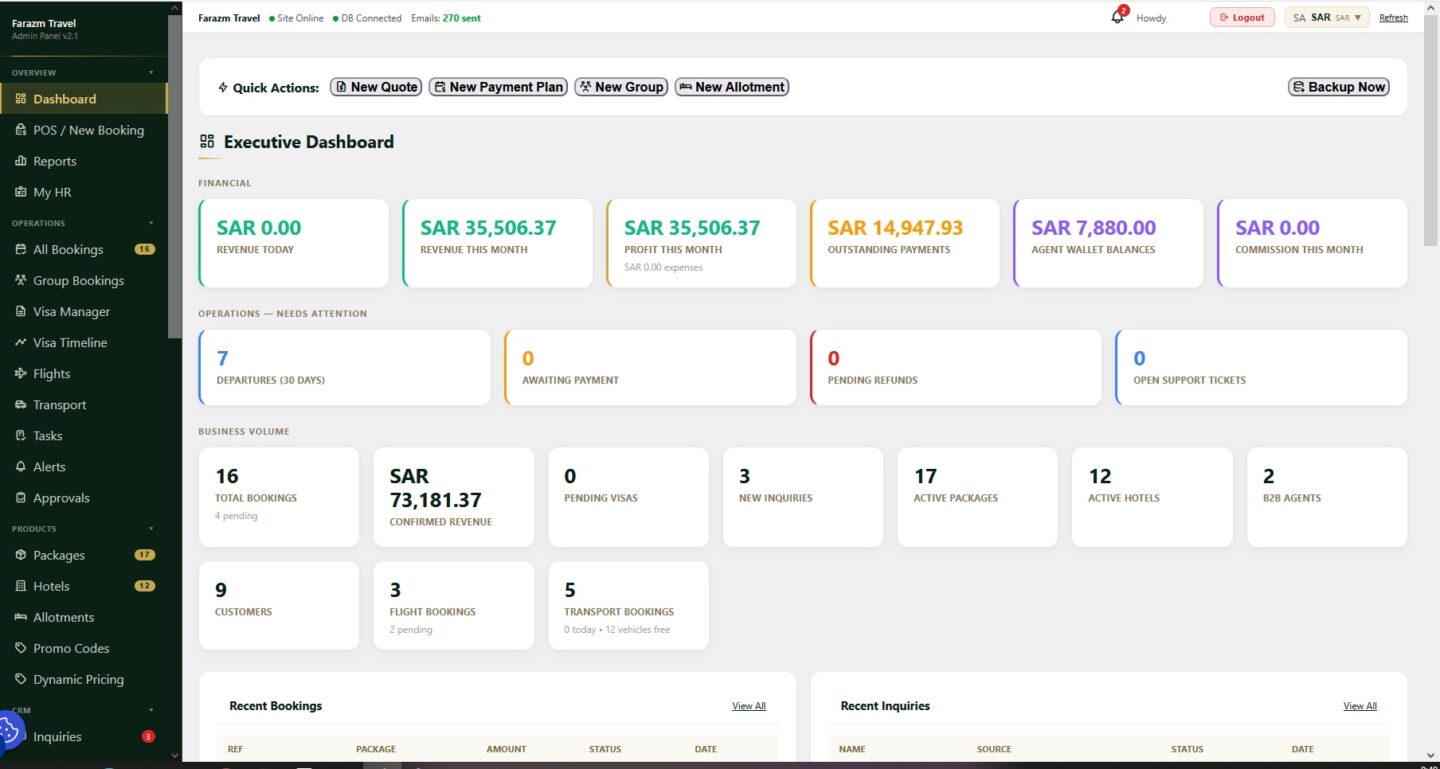
FT-ERP – Travel Enterprise Resource Platform
php 8 mysql wordpress rest api

Delivering for clients across

United Arab Emirates Live system See the system
Saudi Arabia Live system See the system
United Kingdom Clients served
What we build

Ten capabilities, three outcomes

Most engagements start in one group and expand into the next. You can buy a single capability or the whole path.

Run your operations

The systems your business runs on day to day.

ERP Solutions

A single operational system covering bookings, inventory, suppliers, accounting, HR and branch control, on a proper double-entry ledger.

Business outcome Month-end closes from one source of truth instead of six reconciled spreadsheets.

CRM Solutions

A pipeline your team will actually update: lead capture, stages, activity logging, quotations and manager dashboards.

Business outcome Every enquiry traceable from source to closed deal, so marketing spend is judged on revenue.

Custom Web Development

Business websites, portals and web applications built from the data model up, not assembled from page-builder templates.

Business outcome A site your team can edit safely that loads fast and is found by the right searches.

Enterprise Software Development

Multi-branch, multi-currency, role-based platforms designed for the scale you are growing into rather than the scale you are at.

Business outcome Scale becomes a configuration change rather than a rebuild in year three.

Automate the manual

Remove the repetitive work between your systems and your staff.

AI Agents & Automation

Agents that qualify enquiries, extract document data, draft replies and summarise activity - with guardrails, audit trails and a human approving anything that commits.

Business outcome Hours of daily reading and retyping removed, with a record of every decision the agent made.

Business Process Automation

Approvals, notifications, reconciliations, document generation and scheduled reporting wired between the systems you already run.

Business outcome The copy-paste between systems disappears, and exceptions get escalated instead of silently dropped.

Digital Transformation Consulting

Architecture review, technical due diligence and a costed remediation plan for the systems you already have.

Business outcome A decision to fix, replace or live with a system, made with numbers attached to each option.

Grow the pipeline

Turn visibility into qualified, attributable enquiries.

Lead Generation Systems

Landing pages, validated capture, instant routing, follow-up sequences and source attribution - including WhatsApp handoff.

Business outcome Enquiries reach a human in seconds and you can see which channel produced which closed deal.

Search Engine Optimization (SEO)

Technical audit, crawl and speed fixes, structured data, intent-mapped content and local visibility work.

Business outcome Qualified organic enquiries that compound, rather than rankings for terms nobody buys on.

Social Media Management

Brand-consistent content, calendar, community response and reporting against a business objective rather than engagement counts.

Business outcome Distribution for your message that stays recognisably yours across every channel.
Why teams choose us

Six claims you can verify before signing anything

Ask for a walkthrough of any system on this page. You will see the admin, the data model and the audit trail - not a slide about them.

Enterprise architecture

Data models, permission matrices and integration points documented and signed off before code is written. Decisions get challenged early instead of discovered late.

artifact: erd + permission matrix

We run what we build

The travel ERP on this page processes real bookings and real money every day, and we are the ones who find out why when it does not.

uptime: 2 yrs continuous

AI with guardrails

Every agent we ship has a defined failure behaviour, an audit trail and a cost ceiling. Where accuracy matters, a person approves before anything commits.

human_approval: required

Accounting done properly

Journal-based double entry, multi-currency, fully audit-logged. The difference between a real ledger and a report over transactions only surfaces during an audit.

ledger: double-entry, 4 currencies

You own everything

Source code, database, brand vector files, hosting credentials and documentation are yours from day one. No lock-in, no hostage licences, no per-seat tax.

handover: full, day one

Security and compliance

Least-privilege roles, input validation, backups verified by restore test and a complete audit trail. Built in, not sold as a hardening phase later.

writes_logged: 100%
Honest comparison

What you are actually choosing between

Three alternatives, honestly assessed. We will tell you when one of them is the better answer for you.

The alternative
Where it tends to hurt
How we differ
An offshore dev shop or freelancer
Where it tends to hurt Builds to the specification you hand over, takes no operational ownership, and is difficult to reach once the invoice clears.
How we differ We operate systems in production, including our own. We are the ones who find out why when a ledger does not balance at month end.
Off-the-shelf software
Where it tends to hurt Forces your process to fit the product, charges per seat as you grow, and the remaining gaps still need a consultant.
How we differ Built to your process, with the code and data yours outright and no per-seat tax. And we will tell you when off-the-shelf is genuinely the cheaper answer.
A large IT consultancy
Where it tends to hurt Senior people sell the work, junior people deliver it, and several layers of account management sit between you and anyone who writes code.
How we differ The engineer who scopes your project builds and supports it, and is reachable directly. Fewer projects, no account-management layer.

If one of the alternatives above is the better answer for your situation, we will say so on the first call. A project that should not have been started is the most expensive kind.

Products we built and still run

Software, not portfolio pieces

Every system below is in production or active development, maintained by the same team that designed it.

Live in production 2025 - 2026

FT-ERP – Travel Enterprise Resource Platform

The operating system for a working travel company.

A 40-plus module ERP running an entire Hajj, Umrah and travel operation: bookings, visa processing, allotments, suppliers, agent network, HR and a full double-entry general ledger.

Scale44 modules
StackPHP 8 · MySQL · WordPress
StatusLive in production
ImpactSpreadsheet accounting replaced with an auditable ledger
Bookings & POS Group bookings Visa manager & timeline Flights, transport & allotments Packages & dynamic pricing Invoices & installments Double-entry accounting Suppliers & supplier portal
ft-erp / production operational
FT-ERP – Travel Enterprise Resource Platform
php 8 mysql wordpress rest api
Live in production 2026

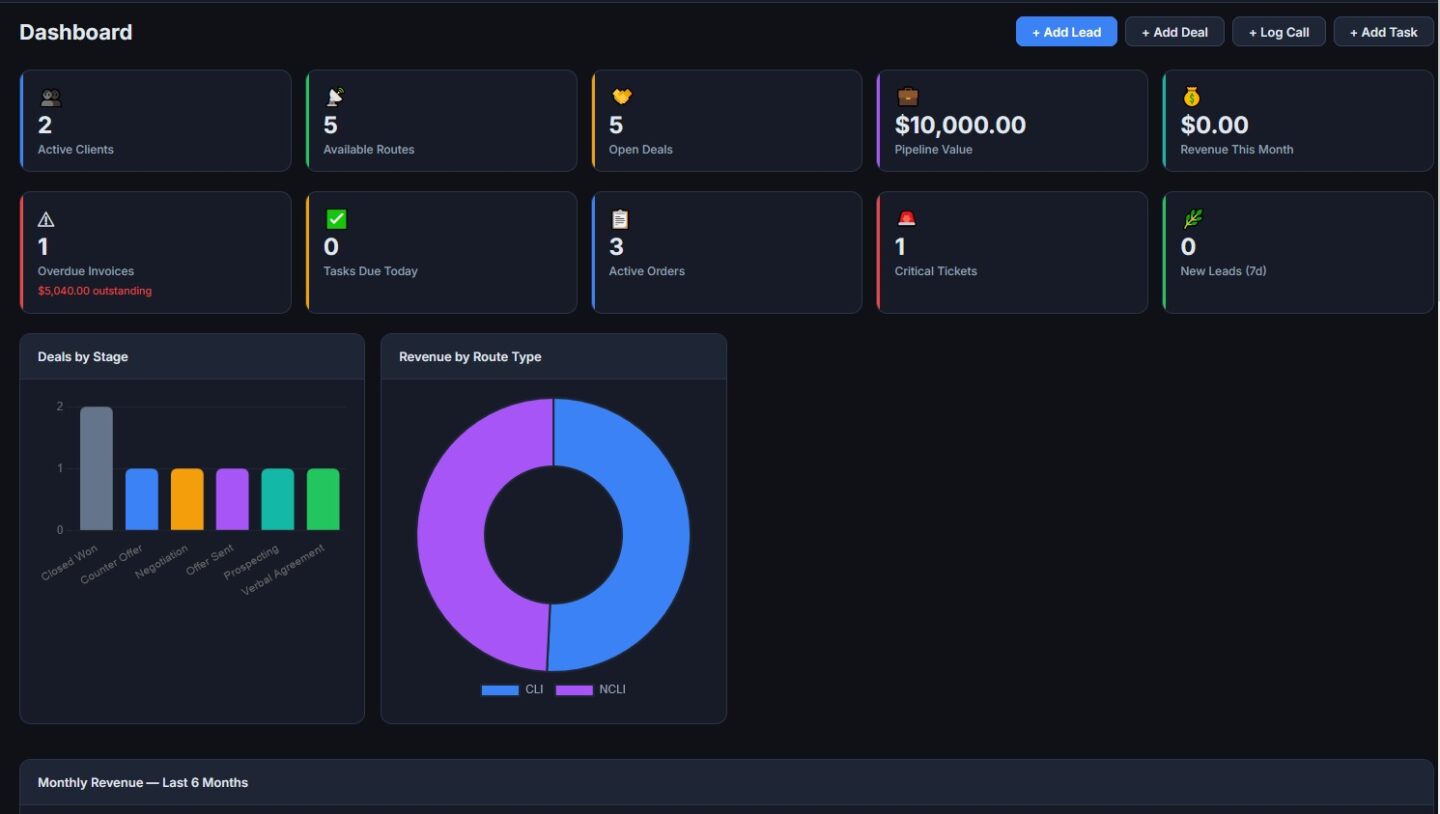
CCroute CRM – WordPress CRM Platform

A full CRM inside WordPress that does not pretend post meta is a database.

A ten-module CRM built as a native WordPress plugin, with AI-assisted call and lead handling, employee-level permissions and its own normalised database schema.

Scale10 modules, 9 tables
StackPHP 8 · MySQL · OpenAI API
StatusLive in production
ImpactCRM capability without a second platform or second login
Lead & contact management Activity history AI summarisation & drafting Employee permissions Task management Reporting Companion marketing site
ccroute / production operational
CCroute CRM – WordPress CRM Platform
php 8 mysql openai api
Live in production 2026

FT-ERP B2B Agent Network & Wallet Engine

Money and inventory move in the same instant. That is a transaction-integrity problem, not a UI problem.

A distribution layer that lets partner travel agents book against a prepaid wallet or credit limit, with atomic settlement, statements and automated notifications.

ScaleWallet + ledger engine
StackPHP 8 · MySQL transactions · REST
StatusLive in production
ImpactAgent-to-finance reconciliation gap eliminated by design
Agent onboarding Prepaid wallet Credit limits Atomic booking settlement Wallet statements Automated notifications Agent-scoped reporting
agent-portal / production operational
WALLETlive balance
CREDITlimits set
SETTLEMENTatomic
STATEMENTSlabelled
BOOKINGSvalidated
NOTIFYautomated
AGENTSscoped
LEDGERreconciled
APIendpoints
php 8 mysql transactions rest
Live in production 2026

Dubai Fit Out Approval – Regulatory Approval Platform

A compliance business is only credible if its own website is precise.

A regulatory approval platform for a Dubai fit-out consultancy: 18 UAE authorities, 12 approval services and a spam-hardened enquiry pipeline, published as structured, searchable content rather than flat pages.

Scale21 templates, 6 content types
StackPHP 8 · WordPress · MySQL
StatusLive in production
ImpactEvery authority and service addressable as its own indexed page
Approval services UAE authorities directory Project records Testimonials FAQ with schema markup Enquiry pipeline One-click setup wizard Authority importer
dfa-theme / production operational
AUTHORITIES18 seeded
SERVICES12 published
TEMPLATES21
CONTENT TYPES6
ENQUIRY FORM4 spam layers
CONTRASTWCAG AA
SETUPone-click wizard
FAQschema markup
FALLBACKno-JS supported
php 8 wordpress mysql ajax
Where we work

Sectors whose operations we already understand

Domain knowledge shortens every project. These are the industries where we already know the vocabulary, the compliance pressure and the places systems break.

Travel & Tourism

A booking touches a package, a hotel allotment, a transport leg, a flight, a visa stage and a payment plan, and in…

Healthcare

Appointment books, patient records, referrals and billing sit in separate systems that were bought at different times, and reconciling them is a…

Logistics

Dispatch runs on phone calls and a whiteboard, proof of delivery arrives as photographs in a group chat, and driver settlement is…

Education

Admissions enquiries arrive faster than anyone can process them during intake season, fee collection is tracked in a spreadsheet that only the…

Professional Services

Client work is tracked in whatever each partner prefers, so nobody has a firm-wide view of pipeline, utilisation or what was promised…

Real Estate

A development is sold on trust before it exists, so the presentation has to carry investor-grade credibility, while behind it plot inventory,…

Construction & Fit-Out

A single project can require submissions to a dozen separate authorities, each with its own portal, drawing standards and review culture. Tracking…

Case studies

Real problems, real systems, measured outcomes

Each study states what was broken, what we built, and what changed afterwards.

Dubai Fit Out Approval  ·  Construction Compliance, UAE

Shipping a compliance site that passes its own accessibility audit

Problem

The business coordinates permits across roughly eighteen UAE authorities, but prospective clients search for the specific authority blocking their project rather than…

  • 18 UAE authorities and 12 approval services published as individually indexed pages
  • Contrast measured across 405 sampled text elements, with every failure corrected to WCAG AA
  • Two real contrast failures found and fixed: brand gold at 2.78:1 on light backgrounds, and a WhatsApp button at 1.12:1 raised to 6.48:1
How the work runs

Five stages, each with an exit condition

A stage does not close because the calendar says so. It closes when its deliverable is signed off, which is what keeps a project from drifting.

01

Discover

We map your current process, existing systems and the cost of the problem.

Closes on Signed scope  ·  Week 1
02

Design

Data model, module breakdown, permission matrix, integration points, UI direction.

Closes on Architecture sign-off  ·  Week 1 - 2
03

Develop

Delivery in working increments you can log into and test. No six-week silence.

Closes on Each module accepted  ·  Ongoing
04

Deploy

Staging, data migration, parallel run against the old process, cutover with rollback ready.

Closes on Verified parallel run  ·  Release week
05

Support

Monitoring, restore-tested backups, defined response times, a named engineer.

Closes on Continuous  ·  Ongoing
Commercials

How engagements are structured

Fixed price against a signed scope, not time and materials. You know the number before work starts.

Discovery & audit

Fixed fee, 1 - 4 weeks

Process mapping, architecture and code review, costed risk register. You keep the documents whether or not you build with us.

Right when You are deciding whether to fix, replace or retain a system.

Fixed-scope build

Fixed price per milestone

Priced against a signed scope, delivered module by module, each accepted against its own criteria before the next begins. Not time and materials.

Right when The requirement is understood and you want a number you can budget against.

Phased programme

Fixed price per phase

For multi-module ERP or platform work. Each phase is scoped and priced at the end of the previous one, so nothing is committed on guesswork.

Right when A large system where the later requirements will change as the earlier ones go live.

Support & operations

Monthly retainer

Monitoring, restore-tested backups, defined response times, a named engineer, quarterly review. A written agreement rather than goodwill.

Right when The system is live and the business now depends on it.

Authority and third-party fees, where a project has them, are passed through at cost and itemised separately. We do not mark them up.

What we build on

Built with modern technologies

We pick tools your next developer can be hired for and your host can actually run. Novelty is a cost, and it is usually paid by whoever maintains the system.

Production, daily

Running live client systems right now.

PHP 8 WordPress MySQL JavaScript Python REST APIs Linux / cPanel

Proficient

Delivered with, comfortable defending in a technical review.

React Next.js Node.js Laravel PostgreSQL Redis Docker

AI & data

In production use, with evaluation sets and cost ceilings.

OpenAI API RAG patterns XGBoost LSTM Prompt engineering

Infrastructure & integrations

Where we deploy, and the systems we connect to.

AWS Docker Cloudflare Linux / cPanel Payment gateways WhatsApp Business API Google Workspace SMTP providers
Before you ask

The questions that decide the deal

Cost, timeline, ownership and what happens when something breaks. Answered here so the first call can be about your business instead.

What does a custom ERP or CRM build actually cost?

Cost tracks scope, not seats. A focused CRM or a single-department system starts materially lower than a multi-module ERP with a double-entry ledger and multi-branch reporting. After a 30-minute scoping call we send a written fixed price range with the module breakdown behind it, and that range does not move unless the scope moves.

We will also tell you when off-the-shelf software is the cheaper answer. Recommending a custom build that should not exist is the most expensive mistake in this category, and it is ours to avoid rather than yours to discover.

How long before we have something we can use?

You get working software you can log into early, not at the end. Discovery and design usually take one to two weeks, after which delivery runs module by module so each piece can be tested and accepted as it lands.

A focused system is typically live in six to twelve weeks. A full multi-module ERP runs three to nine months to complete, but the first usable modules arrive long before that. There is no six-week silence where you wonder what is happening.

We already have a system. Do we have to replace it?

Usually not, and we have no incentive to say otherwise. The first step is an architecture and code review that tells you whether what you have can carry another two years of growth, what the security exposure is, and what the previous vendor left undocumented.

You get a written risk register with costs attached to each option: fix, replace or retain. Where the existing system is worth keeping, we say so and quote for the remediation instead of the rebuild.

Do we own the code and the data?

Yes, entirely, from day one. Source code, database, hosting credentials, brand vector files and documentation are handed over as a matter of course, not negotiated at the end.

There are no hostage licences, no per-seat fees on your own system, and nothing held back to create leverage at renewal. If you want to move the system to another provider, everything needed to do that is already in your possession.

What happens after launch?

Support is a defined agreement rather than goodwill. It covers monitoring, backups that are verified by actually performing a restore, response-time targets, and a named engineer who already knows your stack.

We also run quarterly reviews to look at what the system is doing in practice versus what it was designed to do, because usage patterns after twelve months are rarely the ones assumed at design time.

How do you handle security and our data?

Least-privilege roles, server-side input validation, complete audit trails on financial and administrative writes, and backups tested by restore rather than assumed to work. These are built in during development, not sold afterwards as a hardening phase.

Your data stays on infrastructure you control and own. We can work within your existing hosting, compliance requirements and data-residency constraints, and we will document exactly who has access to what.

Can you work alongside our in-house developers?

Regularly. That arrangement works best when the boundary is explicit: we take specific modules or the architecture, your team takes the rest, and the API contract between them is agreed and written down before either side starts building.

We document to the standard of someone else maintaining the code, because in this arrangement someone else does.

What if the project goes wrong, or you disappear?

Three structural answers rather than a reassurance. First, each stage has a written exit condition, so a project cannot drift quietly for months. Second, you hold the code, credentials and documentation throughout, so another team could pick it up. Third, every system ships with an ERD, a permission matrix and a runbook written for an engineer who has never seen it.

We also run systems of our own in production, which means we are not a project shop that can quietly stop answering the phone.

Start here

Ready to build your next digital solution?

Send the brief and you get a scoped response with approach, milestones and a fixed price range. Not a sales call.

1

A 30-minute call with the engineer who would run your project

Within 2 business days
2

A written scope: approach, module breakdown, milestones, fixed price range

Within 5 business days
3

You decide. No retainer, no obligation, and the scope document is yours to keep either way

Your timeline

Send your brief

Three fields to start. Add project details if you have them.

A real person replies, usually within one business day. Your details are stored on this site only and are never sold or shared.

Book a consultation